
In the ever-evolving landscape of web hosting, security, and open-source content management systems (CMS), community banks and credit unions face unique challenges. In a recent episode of the Mix & Matchbox Podcast, host Brent Feldman sat down with Mike Demo, the Partnership Lead North America at hosting.com, to discuss these challenges and share valuable insights.
In this blog, we’ll dive into the key takeaways from their conversation, providing actionable advice for agencies, banking IT managers, and anyone interested in building secure, reliable, and user-friendly web experiences in the financial sector.
From Joomla to Hosting.com
Mike’s journey in the CMS world began with PHP Nuke, followed by Mambo, and eventually Joomla. His experience in these platforms laid the foundation for his current role at hosting.com, where he focuses on supporting open-source initiatives. Mike emphasizes the importance of nurturing niche CMS communities, such as Joomla and Drupal, which often feel overshadowed by larger platforms like WordPress.
The Importance of Open-Source Relationships
Mike’s passion for open-source software is evident in his belief that fostering relationships within these communities is crucial. He states, “I’m not married to a CMS; I’m in an open-source relationship.” This perspective highlights the need for collaboration and support among different CMS platforms, as they all contribute to the broader open-source ecosystem.
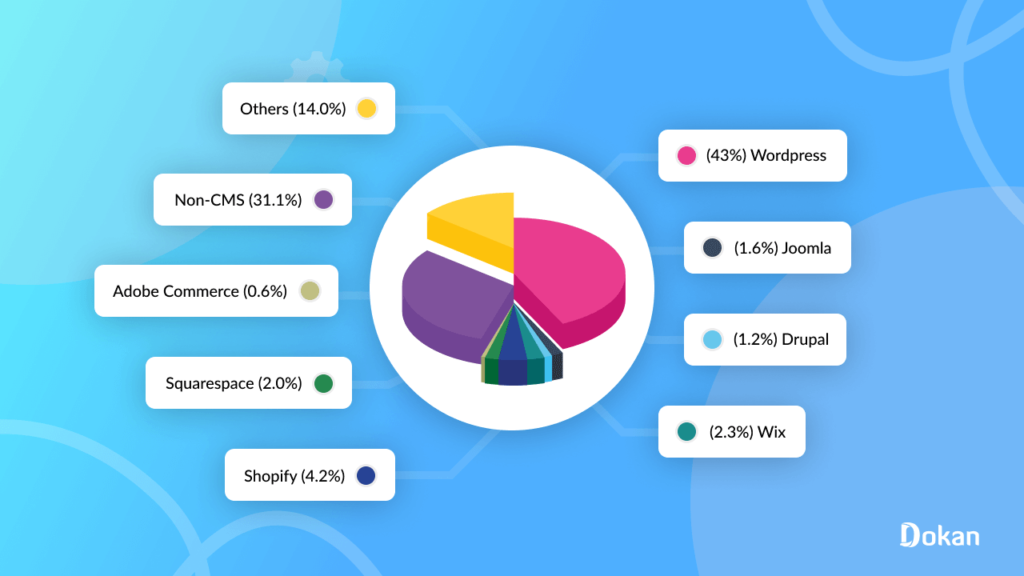
Image source: https://dokan.co/blog/3254/best-cms-platforms-comparison/
Client-Admin Templates: Simplifying the User Experience
One of the standout concepts discussed in the podcast is the “Client Admin Template” (CAT). This approach simplifies the back-end experience for bank staff who may not have a marketing background.
By creating a streamlined interface with only the essential functions, such as updating interest rates or posting holiday closures, agencies can empower non-technical staff to manage their websites effectively.
Key Features of a Client Admin Template:
- Focus on essential functions
- Hide unnecessary options to reduce overwhelm
- Provide easy access to frequently used features
- Allow for advanced access to the full CMS when needed
Avoiding Common Agency Pitfalls
Mike identifies several common mistakes that agencies make when it comes to hosting and security.
Treating Hosting as a Commodity
Many agencies shop for hosting on price alone, without considering the long-term implications. For bank clients, that’s a risky trade-off: cut-rate hosting often lacks the security posture, uptime guarantees, and support responsiveness that regulated financial institutions need. Mike recommends evaluating hosting as an infrastructure partnership, not just a monthly cost.
Weak Backup Strategies
Relying solely on host backups can be risky, since they often live on the same infrastructure as the live site and aren’t built for true disaster recovery. Mike advises agencies to maintain their own independent backup solution, such as off-site storage with a service like Amazon Glacier, so there’s always a clean copy available if something goes wrong on the host’s end.
Insecure Form Handling
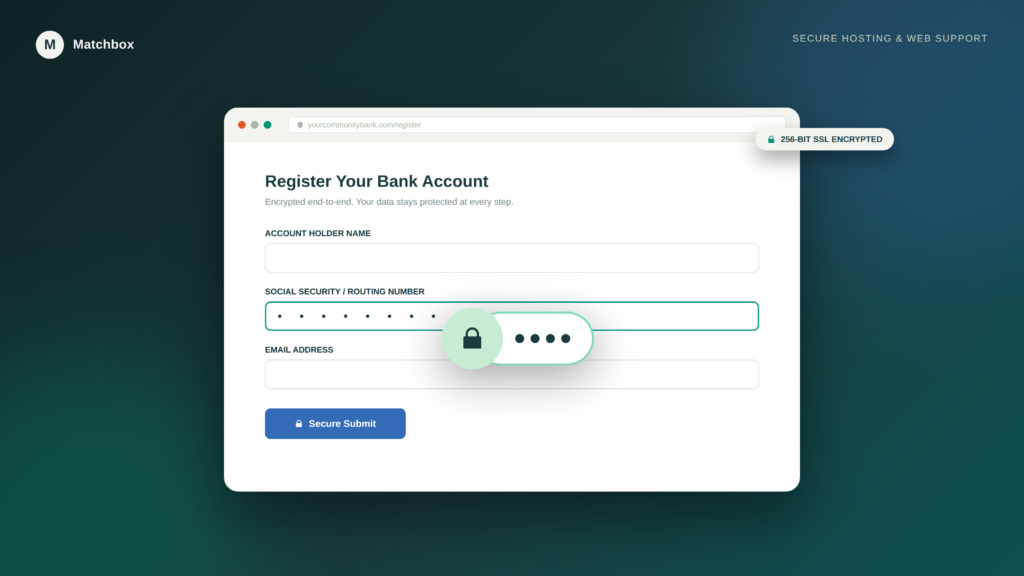
Many agencies fail to encrypt sensitive data collected through forms, whether that’s loan inquiries, account questions, or personal information. For bank websites, this creates real compliance and liability exposure. Mike’s guidance is straightforward: encrypt form data in transit and at rest, and be intentional about what’s collected and where it ends up.
Security Best Practices for Community Banks
Security is paramount for community banks and credit unions, especially when handling sensitive customer information. Mike shares several best practices that agencies should implement:
- Two-Factor Authentication: Implementing two-factor authentication (2FA) using methods like YubiKey can significantly enhance security.
- Encrypted Forms: Ensure that all forms collecting sensitive information are encrypted to protect user data.
- Layered Security: Utilize a combination of web application firewalls (WAF), server-level scanning, and other security measures to create a robust defense.
Choosing a Host for Regulated Industries
When evaluating hosting providers, community banks should ask specific questions to ensure they meet regulatory requirements:
- What certifications and compliance standards do you adhere to (e.g., ISO, SOC 2, HIPAA)?
- What is your disaster recovery plan?
- What is your service level agreement (SLA) for response times?
- Where are your data centers located, and do you have options for data sovereignty?
What Good Incident Response Looks Like
In the event of an outage or incident, effective communication is key. Mike emphasizes that a publicly accessible status page is one of the first things agencies should have in place, and it needs to live on separate infrastructure from the main site or hosting environment. Otherwise, the very outage that takes a site down can take the status page with it, leaving clients and their customers in the dark exactly when they need information most.
Beyond the status page, Mike points to proactive communication as the real differentiator between a good response and a bad one. Clients shouldn’t have to discover a problem on their own or chase down updates; they should hear from their agency first, with clear information about what’s happening and what’s being done about it.
Having a dedicated account manager reinforces this by giving clients a consistent point of contact, which matters even more when the client is a bank managing its own regulatory and customer communication obligations.

The Future of Hosting: 2026 and Beyond
Looking ahead, Mike predicts a shift towards “do-it-for-me” services and an evolution of managed service providers (MSPs). Hosting companies will increasingly offer value-added services, such as maintenance packages and expert consulting, to meet the growing demands of clients.
Navigating Margin Pressure and AI Trends
As agencies face increasing margin pressure, Mike discusses the impact of AI on the industry. While some may fear that AI will replace jobs, he believes that it will ultimately serve as a tool to enhance expertise rather than replace it. Agencies should focus on adding value beyond basic hosting services to remain competitive.
Building Secure and Reliable Web Experiences
In conclusion, the conversation with Mike Demo provides valuable insights for anyone involved in the hosting and security landscape for community banks and credit unions. By focusing on open-source relationships, simplifying user experiences, and implementing robust security measures, agencies can build secure and reliable web experiences that meet the needs of their clients.
For more information and resources, visit hosting.com/agency for agency-focused training webinars and a free trial. You can also connect with Mike on Twitter or via email at [email protected].
Need a hosting and security partner who specializes in banks and credit unions? Reach out to Matchbox to see how we can help.
Never Miss an Episode
Get more insights on design, marketing, and all things digital. Subscribe to our Mix & Matchbox YouTube channel and join the conversation.
Want to Be Featured?
We love connecting with fellow creatives, marketers, and industry pros. If you’d like to share your story or expertise on the Mix & Matchbox podcast, let’s chat.