
Community banking has always been about more than transactions. It’s about trust, relationships, local knowledge, and showing up for the people and businesses that make a community work. But in today’s digital-first world, those values need to expand beyond the brick and mortar location, they have to show up online too.
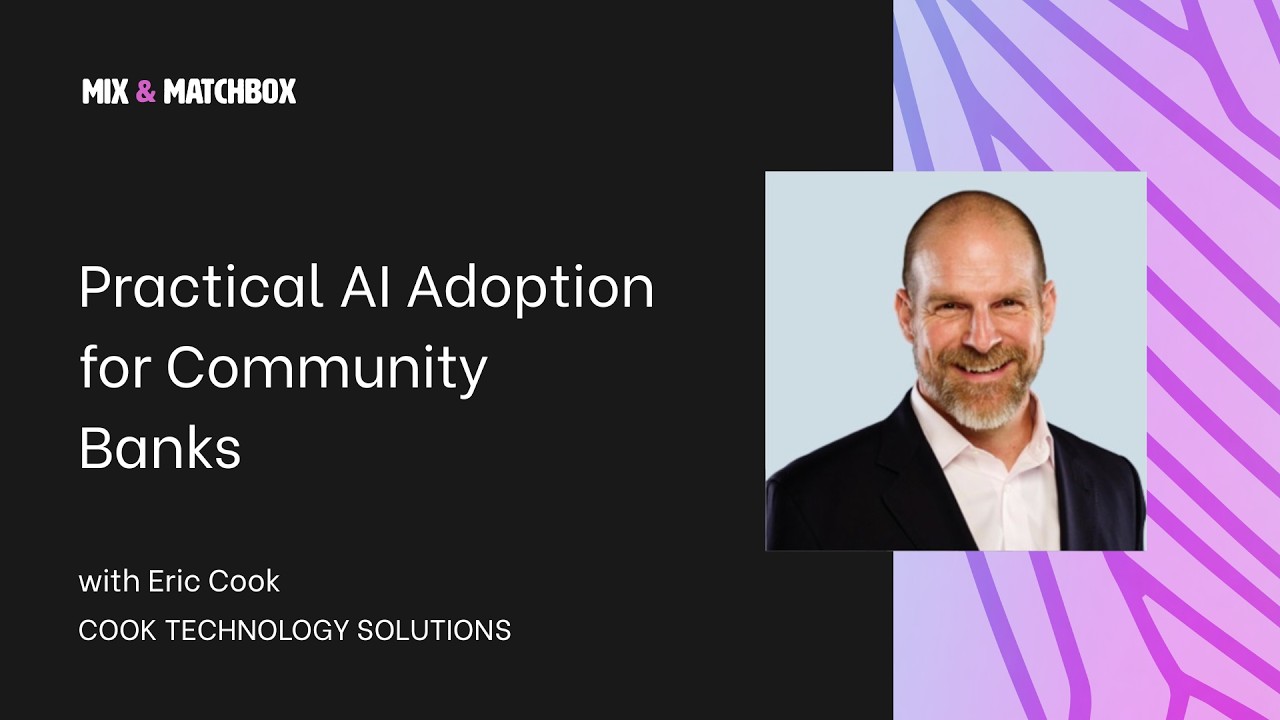
That’s why Brent’s conversation with Eric Cook of Eric Cook MBA on LinkedIn, WSI, and Community Banking AI was such a valuable one. Eric has lived through the evolution of banking and digital strategy from the earliest days of the internet to the rise of AI, and he brings a rare perspective. He understands both the mindset of a banker and the realities of digital marketing.
Eric’s message is simple but powerful: if community banks want to compete, they can’t just think like a bank. They have to think like a brand.
From Gateway 2000 to One of the First Community Bank Websites
Eric’s story starts in a place many people in banking and tech will appreciate: the early internet era. He talked about the days of Gateway 2000 computers, AOL, dial-up modems, and learning HTML when the web was still something most people barely understood. That curiosity led him and a friend to build one of the early community bank websites in 1995.
They may not have realized it at the time, but adopting this technology early on was a big deal. A small community bank could suddenly appear more modern, more accessible, and more innovative than much larger competitors simply by having a website and online banking presence.
Eric’s experience proved something that still holds true today: a smaller institution can use digital tools to punch far above its weight class. Good user experience, relevant content, and thoughtful digital strategy can make a community bank appear larger, stronger, and more relevant without losing its local personality.
Why a Strong Digital Presence Is No Longer Optional
For years, bank websites were treated like digital brochures. They had a logo, some branch hours, maybe a few product pages, and a login button for online banking, but not much beyond that.
Today, a website is one of the most important business development tools a financial institution has. It’s often the first impression, the lead generator, the educational resource, and the conversion engine all in one. It’s how borrowers, depositors, or business clients decide if a bank is credible and trustworthy.
Eric’s point is especially relevant for small community banks. If your institution already invests heavily in branch design, signage, interiors, and physical experience, why wouldn’t you invest with equal seriousness in your digital presence? A beautiful branch with no signage would be ridiculous, yet many banks invest heavily in a physical location while underinvesting in the online experience that most customers will interact with the most.
A customer’s journey is no longer linear, especially in a digital landscape. Some people search on Google, while others use maps, ask questions on AI platforms like ChatGPT or Perplexity, or browse social media. Potential customers will often compare multiple banks online before ever reaching out. Your website has to work within that digital ecosystem.
The Content Bottleneck: Why Banks Struggle to Publish Great Material
One of the biggest challenges Eric identified is content creation, a challenge that almost every marketing teams can relate to. Banks especially feel it because the subject matter expertise lives across the organization. The problem is that the people who have the time to write, publish, and optimize content are often not the same people who understand mortgage lending, treasury services, commercial banking, or compliance nuances.
Marketers are expected to produce timely, useful, local, compliant content, but they’re missing critical background knowledge and industry insight. Ideally they’d be able to connect with the experts for that information, but they’re usually busy serving customers, closing loans, managing portfolios, or handling day-to-day operations. Nobody has time these days to sit in a conference room and write a perfectly polished blog post from scratch.
Eric’s solution is refreshingly practical:
- Record a conversation with the subject matter expert.
- Capture their natural language, passion, and examples.
- Transcribe the conversation.
- Use AI to help shape and polish the draft.
- Have a human review, edit, and approve the final piece.
This workflow helps to preserve authenticity and avoid AI hallucinations. AI can help you structure and refine the content, but the real value comes from the lived experience and local insight of the people inside the bank.
That’s also why generic content fails. If you could take a piece of content and move it to another bank’s website without changing anything meaningful, it probably isn’t doing much for you. Great content should sound like your institution, serve your market, and reflect your people.
Why Local Storytelling Beats Generic Banking Copy
There’s a huge difference between saying, “We offer mortgage loans” and telling the story of how a loan officer helped a first-time homebuyer move from renting to owning, or how a local family finally found a home with space for a backyard and a dog. That kind of specificity is what makes a bank memorable.
Eric emphasized that the strongest content includes:
- Quotes from real employees
- Quotes from actual customers when appropriate
- Local market references
- Specific examples of problems solved
- Details that make the institution feel rooted in the community
This also helps to build trust in your institution. If your content feels like it was written by a generic vendor, readers will be able to pick up on that immediately. If it sounds like it came from your community, your team, and your actual experience, it becomes much more engaging and persuasive.
Marketing the Marketing Function Inside the Bank
Nope that’s not a typo. One of the most insightful parts of our conversation was Eric’s idea of “marketing the marketing function.” That phrase describes a problem many organizations face: the marketing team is expected to deliver results, but not everyone else inside the institution understands what marketing actually does.
In banks, that divide can be even stronger. Senior leaders may come from lending, credit, or operations, while marketing is often seen as a support function rather than a strategic one. Marketing is tied to visibility, lead generation, reputation, education, recruitment, and customer experience, which makes it an extremely valuable investment.
One of Eric’s practical tips for addressing this disconnect is to host lunch-and-learns. Bring different departments together and spend a little budget on pizza. While people eat, you can explain what marketing really does, what metrics matter, how SEO works, why content takes time, and how digital ads are measured. You get to provide some education and your employees get a free lunch – it’s a win/win!
When subject matter experts understand what marketers need and why they need it, the process usually gets easier. Then when marketers understand the realities of lending, operations, and compliance, the content gets better. And when leadership sees how it all ties back to strategy, the whole organization becomes more aligned. That’s a win/win/win situation!
What a Modern Bank Website Should Accomplish
A modern community bank website should function like a digital branch and a business development engine.
Eric pointed to several critical website components that matter now:
- Location pages: Each branch or office should have its own page with hours, services, staff, accessibility details, and local information.
- Staff bios: People want to know who they’re working with, especially in community banking.
- Scheduling tools: Make it easy to book appointments or connect with staff directly.
- Educational content: FAQs, product explainers, and updates help customers navigate change and reduce confusion.
- Calculators and scenario tools: Help users self-serve and explore options.
- Online applications and account opening: Reduce friction and support conversion.
- Google Maps and local SEO: Support discovery for customers searching locally.
Location pages are especially underrated. They can support local search, accessibility information, team visibility, service descriptions, and even branch-specific testimonials or community involvement details. Now this doesn’t mean building a singular map page and calling it a day. You’ll want to integrate local keywords into your copy and create location pages for the communities you serve. Customers want detail, and search engines reward specificity.
And yes, even if many people do their banking online, local visibility still matters. When someone needs reassurance, a human conversation, or in-person help, they’ll often look for a nearby branch, staff member, or local review before making a decision.
Measure What Matters, Not Just What’s Easy to Track
Another major theme from our conversation was measurement. Too many organizations ask, “What should we track in Google Analytics?” before they’ve answered the more important question, “What are we trying to accomplish?”
If your business goal is to increase loan inquiries, boost deposit growth, improve online account openings, or drive appointments with local branch staff, then your analytics should reflect those outcomes. The metrics only matter if they connect to a real objectives.
Eric described how banks can use tools like Google Tag Manager and analytics platforms to measure meaningful behavior, such as:
- Location page visits
- Clicks to staff bios
- Appointment booking actions
- Application starts and completions
- Engagement with product pages
- Traffic from local search or maps
When pay attention to the numbers, your website stops being seen as a money hole and starts being seen as a strategic tool that contributes to revenue generation and customer experience.
Accessibility, Privacy, and Compliance Are Also Part of the Equation
Eric talked about the importance of accessibility tools like AudioEye and privacy management tools like Cookiebot, both of which help institutions provide a better and more compliant online experience.
This is especially important because banking websites must serve everyone, including people with disabilities or users who need clearer privacy controls. Accessibility is not optional, it’s part of delivering a fair, usable, responsible customer experience. Cookie consent and privacy disclosure practices are also becoming more important as state and federal expectations evolve. Both accessibility and cookie usage provide legal protection for banks and help build trust among their customers.
As a bank, you’re asking people to trust you with their money. To earn that trust, you need to cover all your bases and provide the most secure digital experience possible. As an added reward, users are often willing to opt into analytics and tracking because they believe the institution will act responsibly.
AI in Banking: What It Can and Can’t Do
AI was another major thread throughout the conversation, and Eric’s perspective was refreshingly balanced. He is not anti-AI, but he makes it clear that AI should not be used blindly.
One of the most important concepts he shared is that AI should be treated like a genius-level intern or thought partner. It can draft, suggest, organize, and accelerate work, but it still needs a human in the loop.
That means:
- Reviewing outputs carefully
- Correcting inaccuracies
- Checking brand voice and tone
- Making sure no sensitive information is exposed
- Pushing back when the answer doesn’t make sense
Eric also made a critical point: simply giving employees access to AI tools and hoping for the best is not a strategy. It requires change management and guidance from leadership. People need training, guardrails, and a clear understanding of when and how to use AI safely.
That’s especially true in banking, where privacy, confidentiality, and compliance are always top of mind. Banks can’t just ignore AI and pretend that people won’t use it. “Shadow AI” is already happening, just as “shadow social media” did years ago. Employees will find ways to use tools that help them work faster. Instead of allowing it to be a wild west of AI usage at your organization, the better approach is to provide structure, expectations, and education.
How AI Can Help Banks Right Now
Despite the risks, Eric sees AI as a major opportunity for community banks. When used well, it can improve productivity, accelerate content creation, and support better customer experiences.
Some of the most practical applications include:
- Drafting content: Turning recorded conversations and notes into usable first drafts.
- Internal knowledge support: Helping employees search policies, procedures, or FAQs more efficiently.
- Chatbots: Providing after-hours support trained on approved website content.
- Idea generation: Supporting campaigns, headlines, outlines, and brainstorming.
- Workflow assistance: Helping teams summarize, organize, and refine information faster.
The biggest opportunity may be in customer service. If a user lands on a bank website after hours and can ask a chatbot a question about mortgage products, locations, or services and get a helpful answer immediately, that’s a better experience than filling out a form and waiting until tomorrow. If the answer is useful, chances are that person won’t care whether a human or AI helped deliver it, as long as the experience is fast, accurate, and easy.
The Future: AI Agents, Search, and the Agent-to-Agent Economy
Looking ahead three to five years, Eric believes the web will change again. He made a compelling prediction: future visitors may not just be humans, they may also be AI agents researching and comparing options on behalf of humans.
That creates an entirely new set of questions for banks and marketers:
- Will your website allow AI agents to access information?
- How will you verify or interpret that traffic?
- What content should be made discoverable for agent-driven research?
- How do you stay visible if the user never directly interacts with your brand first?
This is where the concept of the agent-to-agent comes in. If a consumer tells an AI assistant to find the best mortgage options based on location, income, and goals, the assistant may visit dozens of websites and return a summarized recommendation. In that future scenario, banks that have a well-structured website that is clearly written and easy to understand, will have a major advantage.
Start With Why: The Most Important Strategy of All
Near the end of our conversation, Eric returned to one of the most important ideas in all of business: start with why.
That idea, popularized by Simon Sinek, is especially relevant in banking because most bank products are commodities. Checking accounts, savings accounts, mortgages, and digital banking exist everywhere. The difference is rarely the product itself, but more about the institution behind it.
Too many banks try to be everything to everyone, which stretches them too thin. That’s why Eric emphasizes brand thinking. If you know your why, your website becomes sharper, your content becomes more focused, your AI strategy becomes more aligned, your marketing becomes more intentional, and your team becomes more unified.
What Community Banks Should Do Next
If you’re a community bank leader, marketer, or digital strategist, Eric’s advice gives you a very practical roadmap. Start with purpose, then build outward.
Here are the most important next steps:
- Define your why clearly and specifically.
- Audit your website as a strategic tool, not just a digital brochure.
- Build content workflows that make it easier to capture SME expertise.
- Educate internal teams on marketing, SEO, and digital strategy.
- Use analytics to track the outcomes that actually matter.
- Invest in accessibility and privacy compliance.
- Adopt AI carefully, with human review and governance.
- Think about the next generation of search and discovery.
Final Thoughts
Eric Cook’s perspective is a valuable reminder that community banks do not need to become something they are not in order to stay competitive. They simply need to be more intentional about how they show up, tell their story, and use digital tools to amplify what makes them special.
The institutions that will thrive are the ones that embrace their identity, invest in their digital presence, and use AI and automation to enhance (not replace) the human relationships that define community banking.
Think like a brand. Act like a trusted local partner. Build a website and content strategy that reflects your true why. That is how community banks can compete, grow, and lead in the years ahead.
If you want to explore more from Eric’s world, check out The Linked Banker for mastermind and mentoring support, or visit Community Banking AI to learn more about how banks are navigating the next wave of digital transformation. You can also connect with the team behind the episode at Matchbox Design Group’s Mix & Matchbox podcast.
Never Miss an Episode
Get more insights on design, marketing, and all things digital. Subscribe to our Mix & Matchbox YouTube channel and join the conversation.
Want to Be Featured?
We love connecting with fellow creatives, marketers, and industry pros. If you’d like to share your story or expertise on the Mix & Matchbox podcast, let’s chat.