
On this episode of the Mix and Matchbox podcast, Mitch Weisburgh, author of Mindshifting and former EdTech entrepreneur, offers a fresh perspective on how we can reshape our thinking and approach to learning.
In this blog post, we will explore the key insights from Mitch’s journey, the principles of mind-shifting, and practical tools you can apply to enhance your resourcefulness, resilience, and collaboration skills.
The Journey to Mind-Shifting
Mitch’s journey began with a passion for education and technology. After spending nearly 20 years in the EdTech industry, he realized that despite advancements, students were not better prepared for adulthood than they were 15 years ago. This realization sparked a quest for deeper understanding and a desire to make a meaningful impact.
His pivotal moment came when he received an invitation to conduct a workshop in Niger. This experience led him to explore how successful individuals evaluate situations and act to achieve results. Through extensive reading across various disciplines, Mitch identified three core elements that form the foundation of his mind-shifting framework:
- Resourcefulness
- Resilience
- Collaboration
An Impactful Workshop in Niger
During his two-day workshop in Niger, Mitch introduced these concepts to a group of 60-70 students aged 18-25. The response was overwhelming, with participants expressing a newfound understanding of how to approach challenges. This experience solidified Mitch’s commitment to mind-shifting as a means to empower individuals to navigate their lives more effectively.
Understanding the Limbic Brain
One of the key insights from the workshop Mitch shares is the role of the limbic brain, often referred to as the survival brain. This part of our brain is designed to keep us safe and make quick decisions based on limited information. However, it can also lead us to default to safety and avoid risks, which can hinder our growth.
In contrast, the pre-frontal cortex is responsible for higher-order thinking, empathy, and creativity. Engaging this part of the brain allows us to make more informed decisions and explore possibilities beyond our immediate reactions.
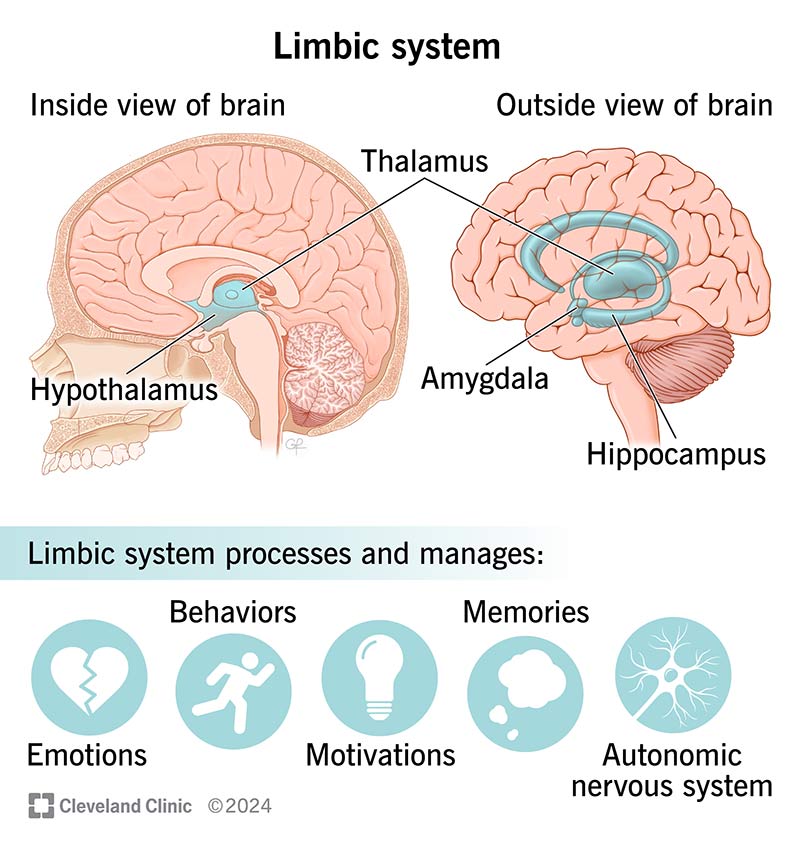
Image source: https://my.clevelandclinic.org/health/body/limbic-system
Breaking Free from “Sure-Thing” Beliefs
Mitch emphasizes that just because we are certain about something does not make it true. Many individuals operate under “sure-thing” beliefs that can limit their potential. By recognizing these beliefs and challenging them, we can open ourselves up to new perspectives and solutions.
Diving Deeper into the Three Pillars of Mind-Shifting
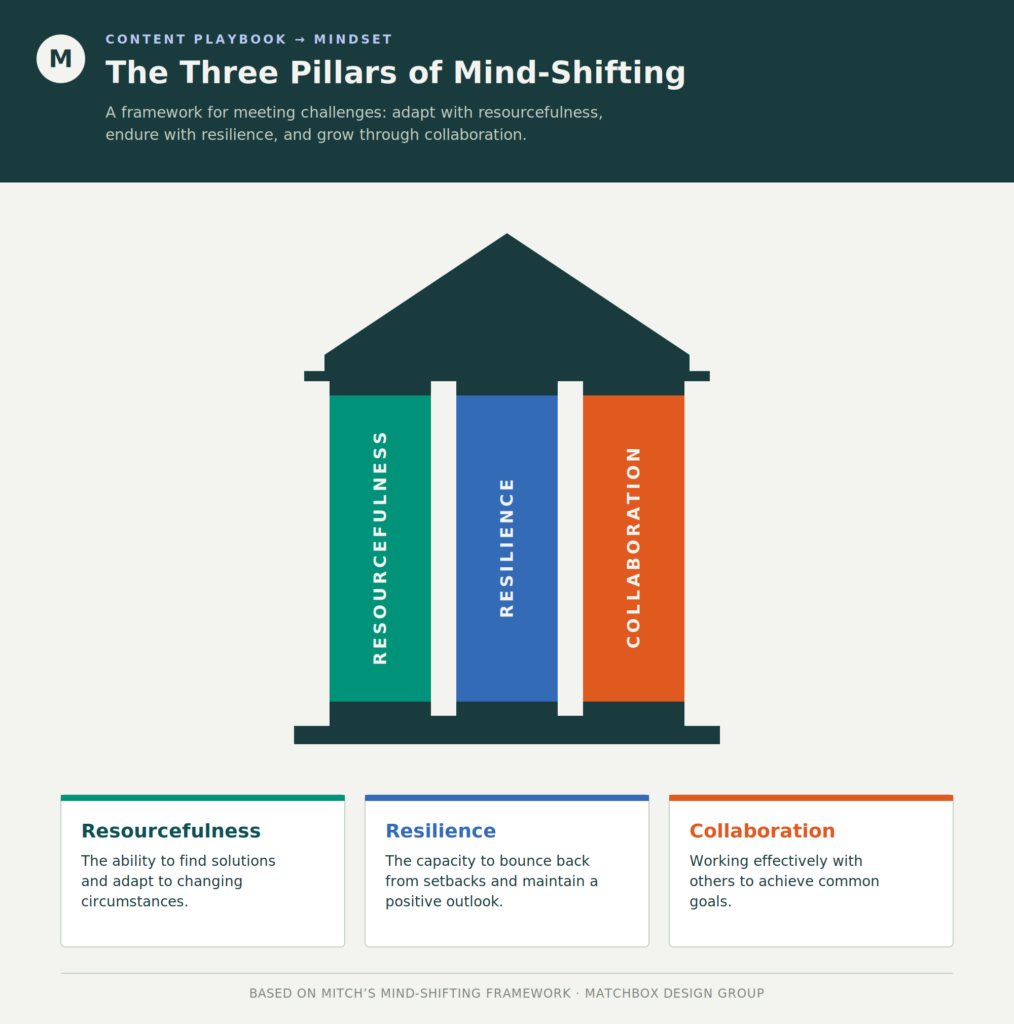
Mind-shifting is a set of mutually reinforcing habits that change how you meet challenges. Mitch breaks this down into three pillars that work together. Understanding each pillar individually makes it easier to recognize which one you’re leaning on, or missing, in any given moment.
Resourcefulness
This is about your relationship with constraints. When something doesn’t go as planned like a client canceling, a strategy that stops working, or missing information, resourcefulness is the instinct to look at what you do have. You can build a new path forward, rather than waiting for ideal conditions to return.
It’s less about having more resources and more about a mindset that treats limitations as a puzzle to solve. Practically, it shows up as creative problem-solving, willingness to experiment with unconventional approaches, and comfort with ambiguity.
Resilience
Where resourcefulness is about the problem-solving in the moment, resilience is about what carries you through the emotional and energetic toll of setbacks over time. It’s the ability to absorb a failure, a rejection, or a plan falling apart, process it without spiraling, and come back to the work with your outlook still largely intact.
This isn’t the same as suppressing frustration or pretending setbacks don’t sting. Genuine resilience usually involves acknowledging the difficulty, extracting whatever lesson is there, and then consciously choosing to re-engage rather than staying stuck in the setback. Over time you’re proving to yourself that recovery is possible and makes the next one a little easier.
Collaboration
This pillar shifts the focus from individual capability to shared capability. Mind-shifting isn’t just an internal, solo experiences—it recognizes that most meaningful problems are bigger than one person’s perspective or skill set. Collaboration means being able to communicate your thinking clearly, stay open to being wrong or incomplete, and integrate other people’s ideas without ego getting in the way.
It also means recognizing when a shift in your own mindset is best supported by other people (mentors, peers, teams) rather than trying to white-knuckle a change alone. In a work context, this is what turns individual mind-shifting into a team or organizational capability.
The Role of Emotions in Decision-Making
Emotions play a significant role in our decision-making processes. Mitch discusses the concept of joy and how it can serve as a barometer for our overall well-being. While short-term happiness can be fleeting, focusing on long-term fulfillment and meaning is crucial for sustained happiness.
Understanding the four “happy hormones” (dopamine, oxytocin, serotonin, and endorphins) can help us navigate our emotional landscape. However, it’s essential to be aware of the potential traps these hormones can create, leading to addictive behaviors.
Transforming Procrastination into Productivity
Procrastination is often viewed negatively, but Mitch encourages us to reframe it as a signal. Instead of beating ourselves up for procrastinating, we can ask ourselves what we truly want to achieve and how we can make the task more enjoyable. This shift in perspective can lead to increased motivation and productivity.
Building Mental Fluencies
Mitch also draws parallels between mind-shifting principles and the techniques used by top salespeople. By rehearsing responses and scenarios in advance, we can build mental fluencies that allow us to navigate challenging situations with ease. This preparation helps us focus on the present moment and respond effectively to unexpected challenges.
Metacognition and Self-Awareness
Developing metacognition—thinking about our thinking—is a vital skill in mind-shifting. By becoming more self-aware, we can recognize when we are operating from a limbic state and take steps to calm ourselves. This awareness allows us to access our higher-order thinking and make more informed decisions.
Applying Stoic Principles
Mitch’s approach to mind-shifting aligns with stoic philosophies, emphasizing the importance of our reactions to situations rather than the situations themselves. By cultivating empathy and understanding, we can navigate conflicts more effectively and foster collaboration.

The Power of Community Support & Finding Balance
One of the most significant aspects of mind-shifting is the importance of community. Mitch highlights the value of having trusted advisors who can support us in our journey. By sharing a common vocabulary and understanding, we can help each other navigate challenges and celebrate successes.
In a world that often glorifies busyness, Mitch cautions against taking on too much at once. While ambition is essential, focusing on one or two changes at a time is more effective for long-term growth. By celebrating small wins and learning from setbacks, we can create a sustainable path toward personal development.
Start Your Mind-Shifting Journey Today
Mitch Weisburgh’s insights into mind-shifting offer a powerful framework for personal and professional growth. By embracing resourcefulness, resilience, and collaboration, we can navigate life’s challenges with greater ease and fulfillment. Whether you’re a founder, manager, educator, or simply someone looking to upgrade your mental operating system, the principles of mind-shifting can help you unlock your potential.
To learn more about mind-shifting and access valuable resources, visit MindShifting with Mitch and check out the MindShifting Educators Newsletter.
Remember, the journey of mind-shifting is ongoing. Embrace the process, celebrate your progress, and continue to seek out opportunities for growth. Start shifting your mind today!
Never Miss an Episode
Get more insights on design, marketing, and all things digital. Subscribe to our Mix & Matchbox YouTube channel and join the conversation.
Want to Be Featured?
We love connecting with fellow creatives, marketers, and industry pros. If you’d like to share your story or expertise on the Mix & Matchbox podcast, let’s chat.