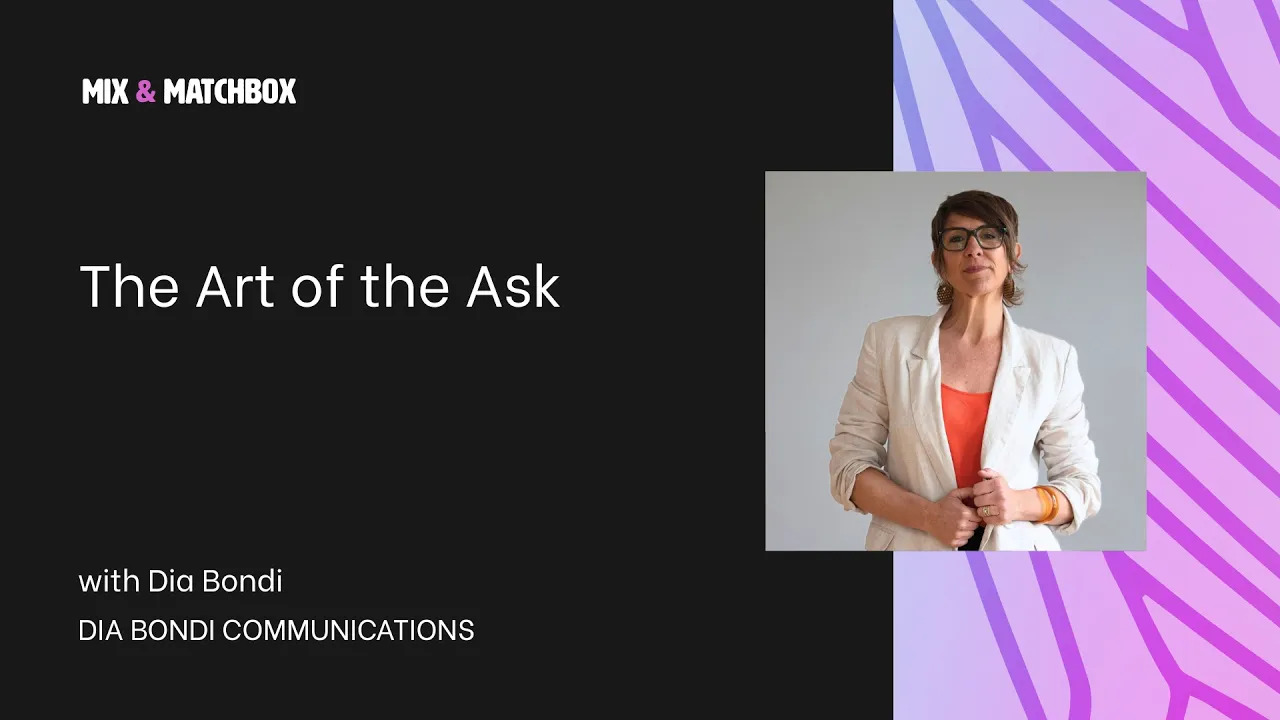

In the world of leadership and negotiation, the ability to ask boldly can be a game-changer. In a recent episode of the Mix & Matchbox Podcast, leadership communication expert Dia Bondi shared her unique journey from auctioneer to coach, revealing how the skills she honed on the auction stage can be applied to everyday business scenarios.
This blog post will delve into the key insights from Dia’s conversation, exploring the frameworks and mental models that can help founders, CEOs, and employees stretch their asks without losing credibility.
From Auctioneer to Leadership Coach
Dia Bondi’s journey into the world of auctioneering began as a bucket-list item during a sabbatical. With over two decades of experience as a leadership communications coach, she decided to explore auctioneering as a new hobby. Little did she know that this experience would lead to the development of a powerful framework for negotiation and leadership.
During her time at auctioneering school, Dia learned that the skills of asking for bids could be translated into the business world. She realized that entrepreneurs and leaders often struggle with making bold asks, whether for funding, partnerships, or opportunities. This epiphany led her to create the concept of asking like an auctioneer, which emphasizes the importance of direct and confident communication.
The Zone of Freaking Out (ZoFO)
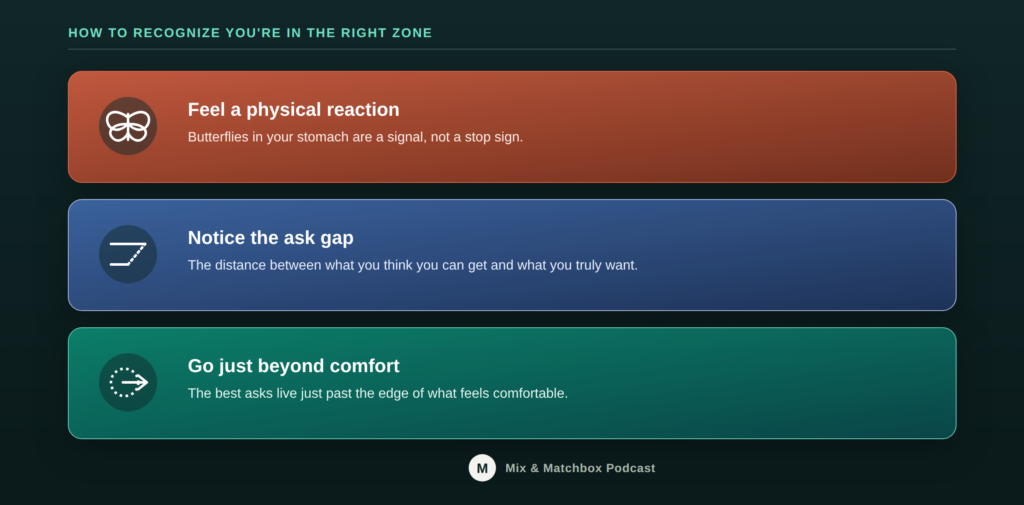
One of the key concepts Dia introduced is the “Zone of Freaking Out” (ZoFO). This term describes the discomfort that often accompanies making bold asks. Dia explains that stepping into discomfort is crucial for effective negotiation and leadership. Here’s how to recognize when you’re in the right zone:
- Feeling a physical reaction, such as butterflies in your stomach.
- Identifying the difference between what you think you can get and what you truly want to ask for.
- Understanding that the best asks often lie just beyond your comfort zone.
By embracing the ZoFO, leaders can challenge their assumptions and push themselves to ask for more than they initially believe is possible.
How to Deal with the Fear of Rejection
Many individuals fear rejection, viewing a “no” as a personal failure. Dia encourages leaders to reframe this mindset. Instead of seeing a “no” as a dead end, it should be viewed as valuable data.
A “no” can provide insights into what your audience values. When they tell you “no”, they are communicating their preferences to you. The key here is to understand that rejection is not a reflection of your worth, but rather a part of the negotiation process. You can use the feedback from a “no” to refine future asks and improve your approach. This shift in mindset can empower leaders to make bolder asks without the fear of damaging their credibility.
Price vs. Worth: Understanding Your Value
Dia emphasizes the distinction between price and worth. Many professionals tie their self-worth to the asks they make, which can hinder their ability to negotiate effectively.
In order to separate the two, you need to recognize that price is what someone is willing to pay, while worth is your intrinsic value. Logically most of us know that rejection isn’t personal, especially in relation to sales and auctioneering, but our emotions don’t always get the memo. In some scenarios, you can bring solid value to the table, but that may not be enough if the price point is higher than someone is willing to pay.
The best approach is to focus on the value you bring to the table rather than the monetary figure attached to the ask. The hope is that they’ll see that the value outweighs the cost. By separating price from worth, leaders can approach negotiations with greater confidence and clarity.
Women and Negotiation
Dia highlights the unique challenges women face in negotiations, often underselling themselves. Research shows that women ask for raises and promotions at the same rate as men but receive them less frequently.
To combat this, Dia encourages women to recognize their value and advocate for themselves. It’s not always easy, but recognizing your worth and holding firm on that can be very empowering and will help build confidence and raise success rates. One way to build this confidence is to seek out mentorship and support from other accomplished women who can give tips on how to navigate negotiation scenarios.
A tip for employers is to make sure you’re fostering and environment where women feel empowered to make bold asks without fear of judgement. By addressing these patterns, organizations can create a more equitable landscape for women in leadership roles.

Setting Your Reserve and Planning for Success
Another critical aspect of effective negotiation is setting a reserve. Dia explains that having a clear understanding of your minimum acceptable outcome is essential.
To do this, you’ll need to identify the lowest acceptable outcome you are willing to accept. This is going to vary depending on what you’re negotiating and what you feel most comfortable with. The important part is to not undersell yourself and accept less than you deserve.
You may also want to consider both monetary and non-monetary factors in your reserve. Let’s say you’re approaching your yearly review. During the conversation you ask for a raise, and your manager tells you the company had a rough year financially and they’re not offering raises. As an alternative, you could suggest a shift in responsibilities where some less impactful tasks are taken off your plate or a more flexible work schedule. These non-monetary options still hold value.
Leaders should also develop a plan for what to offer and allow for flexibility in negotiations. The goal is for both parties to leave the conversation feeling heard and content with the outcome.
The Four Types of Asks
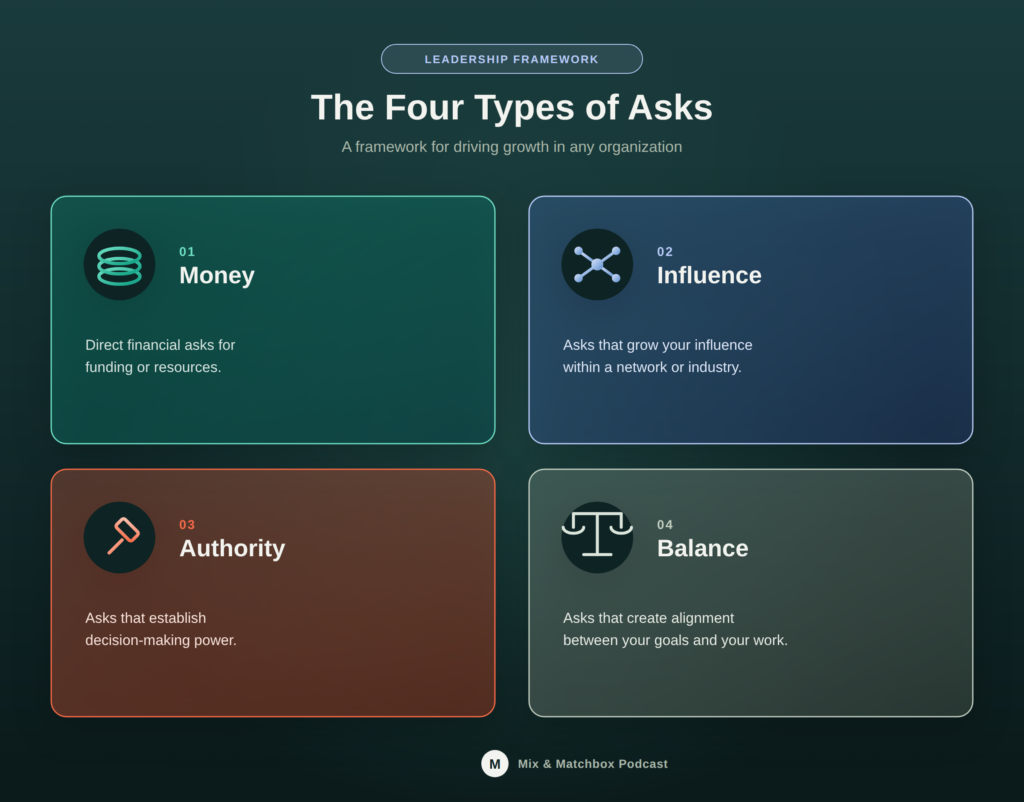
Dia outlines four categories of asks that can drive growth in any organization:
- Money: Direct financial asks for funding or resources.
- Influence: Asks that grow your influence within a network or industry.
- Authority: Asks that establish decision-making power.
- Balance: Asks that create alignment between your goals and the work you do.
For example, Dia shared a story about a founder who made a non-financial ask to create a governance board, which ultimately generated $10 million in value for her organization. This illustrates how non-monetary asks can have a significant impact on growth.
Practical Auctioneer Tactics for Everyday Conversations
To help leaders adopt the mindset of an auctioneer, Dia offers several practical tactics.
Ask for more than you think you can get.
Most people start low because they’re scared of sounding greedy or getting laughed out of the room. Dia’s point is that the number that makes you a little nervous to say out loud is usually closer to what you could actually get than the “reasonable” number you talked yourself into. Auctioneers open high on purpose, they know the price only moves one direction from there.
Say you’re asking for a raise and your gut is telling you to request 5%. Push past that initial number and ask for 10%. Worst case, you negotiate down from there. You almost never get more than you originally asked for.
Use the question, “What would get a no?” to calibrate your asks.
This one’s less about you and more about mapping the other person’s limits before you’re mid-negotiation trying to guess them. Ask it plainly: “Is there a number or a scope that would be a hard no for you?” You’ll usually get a candid answer, and now you know the limitations instead of feeling around for it blindly. It signals you’re not afraid of hearing no, which tends to make people more direct with you in return.
Practice your delivery to build confidence in high-stakes conversations.
This is usually the one people skip because it feels unnecessary. You know what you want to say, so why rehearse it? The thing is, there’s more to communication than just words, there’s your mannerisms, inflection and tone – all of which can send nonverbal signals. If you ask in a way that sounds as if you’re already apologizing for asking, it’s not going to be as impactful and may signal to the other person that they can go lower with their offer. If you ask directly, with confidence, and without over explaining yourself, the other person is much more likely to take your ask seriously.
Auctioneers don’t pause or hedge mid-call. That’s not because they’re naturally fearless, it’s usually because they’ve rehearsed their lines. Borrow that. Say your number in the mirror, say it to a friend or partner, say it to a colleague, and say it in the car on the way in. By the time you’re in the actual conversation, it should feel a lot more natural.

Finding Your Leadership Voice
Dia emphasizes the importance of speaking from authenticity and conviction. Leaders are most powerful when they communicate from their true selves. Here are some steps to help you find your leadership voice:
- Reflect on your core values and beliefs as a leader.
- Identify your unique perspective and how it differentiates you from others.
- Practice articulating your thoughts and ideas in a way that resonates with your audience.
By honing your leadership voice, you can build credibility and influence within your organization.
Ready to Level Up Your Asks?
Dia Bondi’s insights on the art of the ask provide a powerful framework for leaders looking to enhance their negotiation skills. By embracing discomfort, reframing rejection, and understanding the difference between price and worth, professionals can make bolder asks that drive growth and create value for all parties involved.
To dive deeper into Dia’s teachings, check out her book, Ask Like an Auctioneer, and consider joining her Transformational Voice Intensive for a hands-on experience in developing your leadership voice.
Remember, the next time you find yourself in a high-stakes conversation, channel your inner auctioneer and ask boldly!
Never Miss an Episode
Get more insights on design, marketing, and all things digital. Subscribe to our Mix & Matchbox YouTube channel and join the conversation.
Want to Be Featured?
We love connecting with fellow creatives, marketers, and industry pros. If you’d like to share your story or expertise on the Mix & Matchbox podcast, let’s chat.